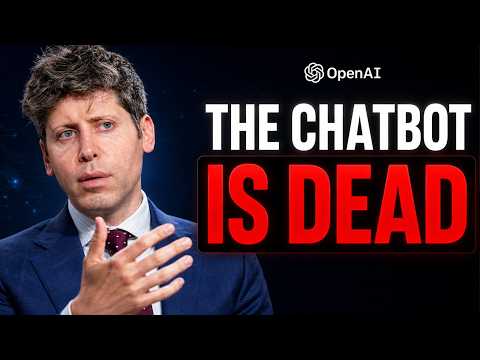
ChatGPT Is Getting Its Biggest Upgrade Ever
Job gecmisi
| Job | Durum | Deneme | Worker | Istek | Baslama | Bitis |
|---|---|---|---|---|---|---|
| SummarizeYouTubeTranscript #86 | Done | 1 | learning-prod-worker-1 | 2026-06-19 02:35:49 | 2026-06-19 02:36:26 | 2026-06-19 02:36:38 |
| FetchYouTubeTranscript #81 | Done | 1 | learning-prod-worker-1 | 2026-06-19 02:32:53 | 2026-06-19 02:33:26 | 2026-06-19 02:33:46 |
Ozet
Ozet
OpenAI, ChatGPT'nin en büyük güncellemesini önümüzdeki haftalarda kullanıma sunmaya hazırlanıyor. Bu güncelleme, ChatGPT'yi sadece soru-cevap platformu olmaktan çıkarıp, kodlama araçları, görsel üretimi, üçüncü taraf uygulamalar, iş yeri otomasyonu ve kişisel asistan görevlerini yerine getiren tam kapsamlı bir yapay zeka süper uygulamasına dönüştürmeyi hedefliyor. Özellikle Codex adlı programlama aracı, ChatGPT'nin merkezine yerleştirilerek, hem geliştiricilere hem de geliştirici olmayan kullanıcılara yönelik iş ve üretkenlik araçları sunulacak.
OpenAI, bu dönüşümü hızlandırmak için ürün ekiplerini yeniden yapılandırdı ve Codex kullanımını artırmak için masaüstü uygulaması gibi yeni arayüzler geliştirdi. Bu hamleler, Anthropic gibi rakiplerin programlama yeteneklerinde ilerleme kaydetmesiyle rekabetin kızıştığı bir dönemde gerçekleşiyor. Ayrıca, güvenlik risklerine karşı "lockdown mode" gibi özellikler eklenerek, hassas veri kullanan kullanıcılar için koruma sağlanıyor. OpenAI, bu güncellemeyle ücretsiz kullanıcı tabanını ücretli kurumsal müşterilere dönüştürmeyi ve yapay zekayı günlük yaşam ve işin ayrılmaz bir parçası haline getirmeyi amaçlıyor.
Ana Fikirler
- ChatGPT, sadece sohbet aracı olmaktan çıkarak çok yönlü bir AI süper uygulamasına dönüşüyor.
- Codex, programlama ve otomasyon görevlerinde ChatGPT'nin merkezine yerleştiriliyor.
- Güncelleme, kodlama bilgisi olmayan kullanıcılar için de iş ve üretkenlik araçları sunacak.
- OpenAI, masaüstü uygulaması ve yeni arayüzlerle Codex kullanımını yaygınlaştırıyor.
- Rakip Anthropic, programlama alanında önemli ilerlemeler kaydetti ve rekabeti artırdı.
- OpenAI, ürün ekiplerini yeniden yapılandırarak kaynaklarını kodlama ve kurumsal araçlara kaydırdı.
- "Lockdown mode" gibi güvenlik önlemleri, hassas veri kullanan kullanıcılar için geliştirildi.
- OpenAI, ücretsiz kullanıcı tabanını ücretli kurumsal müşterilere dönüştürmeyi hedefliyor.
- Kodlama yetenekleri, AI'nın genel ilerleyişi ve süperzeka yolundaki kritik bir alan olarak görülüyor.
- OpenAI ve Anthropic, gelir, geliştirici tabanı ve kurumsal benimseme için yoğun rekabet halinde.
Uygulanabilir Notlar
- ChatGPT'nin yeni sürümünde Codex tabanlı otomasyon ve kodlama araçlarını deneyimlemek faydalı olacak.
- İş ve kişisel üretkenlik için ChatGPT'nin entegrasyonlarını (e-posta, takvim, Slack vb.) takip etmek önemli.
- Güvenlik açısından hassas verilerle çalışırken "lockdown mode" özelliği kullanılabilir.
- Rakiplerin (Anthropic gibi) gelişmelerini izleyerek AI araçlarının evrimine adapte olunabilir.
- Kodlama bilgisi olmayan kullanıcılar için tasarlanan yeni araçlar, iş süreçlerinde AI kullanımını artırabilir.
- OpenAI'nin kurumsal çözümlerine yönelik gelişmeler, iş dünyasında AI yatırımlarını şekillendirebilir.
Anahtar Kavramlar
- ChatGPT Süper Uygulaması
- Codex (OpenAI Programlama Aracı)
- AI Agent (Yapay Zeka Asistanı)
- İş Yeri Otomasyonu
- Üçüncü Taraf Uygulama Entegrasyonu
- Lockdown Mode (Güvenlik Modu)
- Prompt Injection (Komut Enjeksiyonu)
- Anthropic (OpenAI Rakibi)
- Yapay Zeka Çip Projesi
- Kurumsal AI Kullanımı ve Gelir Modeli
Transcript
[music]
>> Chat GPT is about to change more than it
has at any point since 2022. And
OpenAI's goal is obvious, turn it into
the main AI layer for your digital life.
And the timing says everything. Codex is
exploding, Anthropic is attacking the
developer market, OpenAI is trying to
[music] lock down its own chip future,
and Chat GPT is becoming the front door
to the whole strategy. According to
several reports, OpenAI is getting ready
to roll out a major overhaul of Chat GPT
over the coming weeks. And the goal is
to turn Chat GPT from a place where
people ask questions into something much
closer to a full AI super app with
coding tools, image generation,
third-party apps, workplace automation,
personal scheduling, enterprise
services, and agents that complete tasks
[music] for users. One of their senior
employees literally said, "The era of
using AI just for chatting is over."
Which is a pretty bold statement coming
from the company that basically made AI
chatbots mainstream. Tibo Saty, the
OpenAI executive leading core products
and platforms, described the future
version as something people can connect
to through their phone, desktop, or web,
and even talk to while they are in the
car. The idea is that Chat GPT becomes a
personal agent across life and work.
Instead of opening a chatbot, typing a
prompt, getting an answer, and doing the
real work yourself, the long-term vision
is that you give the agent a task and it
figures out which tools to use and how
to finish it. And the most important
part of this overhaul is Codex.
Codex is OpenAI's programming tool, and
it is one of the fastest growing
products inside the company right now.
OpenAI is preparing to integrate Codex
much more deeply into Chat GPT, turning
the normal interface into a gateway for
software control, coding [music] tasks,
workflow automation, and general
computer work. Alex Empirikos, OpenAI's
head of enterprise products, described
this as the second stage. The company
already has an intelligent agent that
can help users do things on [music] a
computer. The next goal is to bring that
capability to everyone, including people
who do not think of themselves as
developers. OpenAI has reportedly
launched six Codex plugins for job roles
like creative production, sales, and
public stock investment, so Codex can
move beyond programmers and become
useful for office work, business tasks,
and personal productivity. For normal
users, the first [music] visible changes
will probably show up inside the ChatGPT
website and mobile app. OpenAI is
expected to add more prompts, buttons,
[music] and entry points that guide
users toward coding tools, image
generation, and third-party applications
from partners like Canva and
booking.com. In the early stage, users
may even get the option to manually
choose whether Codex or regular ChatGPT
should handle [music] a request. The
examples being discussed are very
practical. After connecting email or
Slack, a user could dictate a request,
and Codex could draft the message,
choose the recipient, prepare
everything, and send it after
confirmation. After connecting a
calendar plugin, someone could ask about
upcoming events or quickly pull up
meeting background. A user could even
set a workflow that runs every morning
at 8:00, checks the day's meetings,
scans the inbox, and pushes the most
urgent tasks. That is the real shift,
from answer my question to handle this
task. Satya's longer-term vision goes
even further. [music]
He believes the transition period with
visible buttons, prompts, and tool
selection may not last very long.
Eventually, the model should
automatically understand what the user
wants and decide whether the task should
run locally, in the cloud, through
Codex, through a plugin, or through some
other tool. The user should not have to
care which tool is doing the work. That
is why some people online saw this as an
early step toward AGI style product
design, where the interface slowly
disappears and [music] the agent becomes
the real product. The technical reason
OpenAI believes this is possible comes
from model upgrades. GPT 5.5, released
in April this year, is much better at
long-term multi-step tasks than earlier
models. It needs less manual guidance,
giving Codex more confidence to execute
work after clear instructions. Now,
you've probably noticed how much
attention Claude is getting right now.
Anthropic keeps adding new models and
features, from Claude Code and Claude
Artifacts to skills, connectors, [music]
design tools, and more. And honestly, it
makes sense. Claude has become one of
the most useful AI tools for turning an
idea into something real, whether that
means building an app, creating a
presentation, organizing research,
planning your week, or speeding up work
that would normally take a whole team.
>> [music]
>> The problem is that a lot of people keep
saying learn Claude without actually
showing you a clear way to use it
properly. [music]
That's why today's sponsor is hosting
the world's first Claude-a-thon, a
two-day live workshop happening this
weekend from 10:00 [music] a.m. to 7:00
p.m. Eastern Time. It's a deep dive into
Claude, practical use cases, and more
than 10 other AI tools. And they're
opening 1,000 free [music] seats for a
limited time. Inside the workshop,
you'll learn how to use Claude for deep
research, build artifacts and
dashboards, create full presentations,
[music] set up connectors like Indeed
for job search, build custom GPTs and
agents, and use AI tools for visuals,
videos, and automation. You'll also get
bonus resources like Claude codes, a
prompt library, and a personalized AI
toolkit builder. Link is in the
description, [music] or scan the QR code
to join before the free seats close. All
right, now back to the video.
Mitch Trojanowski, co-founder of Basis,
reportedly said that by GPT 5.5, Codex's
advantages became too significant to
ignore. That point is important because
coding agents need trust. Developers are
careful about giving AI control over
real code. Yet, more of them are
becoming comfortable handing a clear
plan to Codex and letting [music] it
complete the work from start to finish.
Varun Rao, an engineer at Notion, said
that while he and
were building a tool, Codex had been
silently fixing a bug every time. They
only realized the bug had existed for
weeks [music] when they tried other
agents that did not fix it
automatically. That kind of experience
makes the tool feel like part of the
workflow instead of a novelty.
OpenAI also lowered the barrier by
launching a Codex desktop app in
February. This made sense because Claude
Code, Anthropic's competing coding tool,
was originally used through a pure text
command line terminal. That is fine for
experienced developers, yet it creates a
big wall for regular users. A desktop
app gives Codex a more familiar
graphical interface while still helping
power users who run several agents at
the same time. Max Shoning, a product
manager at Notion, reportedly likes
starting a Codex task on a computer and
[music] checking progress later on the
mobile app, which is exactly the
background agent behavior OpenAI wants
to normalize. And the numbers behind
Codex explain why OpenAI is pushing so
aggressively. In mid-May, Google search
interest for OpenAI's Codex reportedly
hit a record high and passed Claude
Code. Since the desktop app launched,
Codex's user base has grown sixfold in
less than 2 months. Weekly active users
reportedly passed 5 million at the end
of May.
Sam Altman said Codex usage is rising 5%
per day, and Greg Brockman reportedly
said enterprise Codex revenue increased
50% week over week. OpenAI has almost 1
billion chat GPT users, or more than 900
million consumer-level users, depending
on the report. Yet, most of them still
use it for free. Culturally, that is a
massive win. Financially, it leaves Open
AI with a huge monetization problem.
Chat GPT became one of the biggest
software products in history, yet the
company now needs to prove to investors
that this giant user base can turn into
serious recurring revenue. That is why
the conversation keeps coming back to
enterprise customers. Around 2 million
businesses use Open AI products, and
they reportedly account for around 40%
of Open AI's revenue. The company
expects that share to rise to 50% by the
end of this year. Codex fits that plan
because coding tools and productivity
agents are easier to sell to companies
than casual chat features. This also
explains some of Open AI's recent
product decisions. In January 2025, Open
AI launched Operator, an agent designed
to use a web browser like a human, doing
things such as booking tickets or
shopping online.
The idea sounded powerful, yet
management reportedly realized that
making AI imitate human clicks on
websites is inefficient. Soudio said
directly, writing code is a more
effective way for AI to handle tasks
like building complex spreadsheets on a
computer. If code is the better
interface for getting work done, then
Codex becomes more than a developer
tool. It becomes the foundation for a
general AI agent. And this is where
Anthropic enters the story. Open AI's
move was pushed, at least partly,
[music] by competition from Anthropic.
The rivalry became more serious in
autumn 2024,
>> [music]
>> when internal benchmarks suggested that
Anthropic's models had moved ahead of
Open AI in programming ability. Then, in
February 2025, Anthropic released the
preview version of Claude code, and Open
AI realized a smaller competitor had
overtaken it in one of the most
important AI categories. For OpenAI,
losing in coding is a huge problem
because coding is tied directly to its
belief about AI progress. If AI can
write better code, it can speed up AI
research, infrastructure, product
development, safety work, and eventually
the race toward superintelligence.
Falling behind in programming means
falling behind on the track that may
matter most. Jenny Shaw, a former OpenAI
researcher and now a partner at Luminous
Capital, described the shift in a very
interesting [music] way.
Around a year ago, OpenAI was focused on
going all out toward the bigger dream,
while Anthropic focused [music] more on
making money first.
Now, the two paths are converging
because both companies are moving toward
IPO-style expectations, and investors
care very directly about revenue.
[music]
OpenAI responded by creating a dedicated
Codex research [music] and development
team led by Satya, giving it high
autonomy and even open-sourcing the code
behind [music] Codex to get direct user
feedback. Then the structure changed. In
January, OpenAI reorganized product
teams around model researchers.
In May, it merged the ChatGPT, Codex,
and [music] API teams into one unified
core product and platform department
under Satya.
That kind of restructuring usually means
[music] resources are moving away from
certain projects. Some consumer-facing
products became casualties. The ChatGPT
shopping checkout feature was put on
hold, and Sora, the video generation
product launched less than a year
earlier, was reportedly shut down.
The strategy is pretty obvious. Move
resources toward enterprise tools,
coding agents, and services people are
willing to pay for. Meanwhile, Anthropic
is pushing hard from the other side.
Anthropic's annualized revenue
reportedly rose to $47 billion dollars
May, driven by Claude Code and Claude
Co-work attracting developers and
enterprises.
OpenAI's annualized revenue has
reportedly passed $30 billion after
previously announcing $25 billion in
March.
Even if the exact numbers need to be
treated carefully, the direction is
clear. The AI labs are fighting over
revenue, developers,
>> [music]
>> enterprise adoption, and the agent layer
at the same time. On June 7th, reports
said Clive Chan, described as employee
number 002 on OpenAI's self-developed
chip project, announced on X that he had
left OpenAI and joined Anthropic. Chan
spent 2 years at OpenAI, said he was the
second person recruited into the
hardware team, watched the chip project
grow from its early formation, and
praised the team as one of the strongest
chip design teams in the world. Still,
he said he could not shake the desire to
climb a new mountain from the bottom
again. So, he chose Anthropic. He said
Anthropic's [music] talent, values, and
ambition impressed him deeply, felt the
work rhythm was intense after only a few
days, and summed it up with one line,
"It's time to build." When people asked
him about OpenAI's chip project, he said
he could not reveal more beyond what had
already been disclosed publicly. He
pointed to the OpenAI and Broadcom
cooperation blog from October 2025,
where the two companies described a 10
gigawatt OpenAI designed AI accelerator
system. OpenAI is responsible for chip
and system design, while Broadcom
handles accelerator and networking
development and deployment. The first
racks are expected in the second half of
2026, with the full project plan to run
until the end of 2029. Chan's background
also shows why this move caught
attention. He graduated from the
University of Waterloo in 2021, helped
build organizations connected to
Canadian Hyperloop, and worked or
interned at Google, SpaceX, QuEra,
Tesla, and OpenAI. His work covered
machine learning infrastructure, liquid
rocket engine projects, GPU
optimization, cluster scheduling, data
center software, training
infrastructure, matrix multiplication,
roofline analysis, hardware performance,
[music] and OpenAI's AI chip effort. His
move to Anthropic became another symbol
of how intense the rivalry has become.
Anthropic employees welcomed him
publicly, while people online joked that
every "I have decided to leave OpenAI
post" now seems to end with Anthropic.
[music]
Others compared it to leaving Real
Madrid for Barcelona, while some
questioned the starting from the bottom
line since Anthropic's valuation is
reportedly close to $1 trillion after a
massive Series H financing. And while
OpenAI is trying to turn ChatGPT into a
more powerful agent platform, [music]
it is also dealing with the risk that
comes with giving AI more access to the
outside world. That is where lockdown
mode comes in. OpenAI recently announced
a feature called lockdown mode, designed
for users and organizations handling
sensitive [music] data. The point is to
reduce prompt injection risks, one of
the biggest security problems for AI
agents. A prompt injection attack
happens when malicious instructions are
hidden inside content the AI reads, such
as a webpage, document, message, or
external data source. If the AI follows
those instructions, it could leak data,
misuse tools, or behave in ways the user
never intended. Lockdown mode is
basically a restricted version of
ChatGPT for sensitive work. It disables
web browsing, image display in
responses, deep research, agent
functions, networking [music] with
canvas code generation, and file
downloads. OpenAI says the mode is not
intended [music] for everyone. It is
designed for people and organizations
that want stricter protection from data
exfiltration risks related to prompt
injection. So, this new Chat GPT
overhaul is really about three things
happening [music] at once. OpenAI is
trying to turn its massive free user
base into paid productivity demand using
Codex as the engine behind that shift
and racing Anthropic in a market where
coding agents, enterprise revenue, AI
chips, and top technical talent are
becoming part of the same war. The old
chatbox made Chat GPT famous. The next
version is being built to make it useful
enough that people and companies
actually pay for it. Also, if you want
more content around science, space, and
advanced tech, we've launched a separate
channel for that. Link's in the
description. Go check it out. Hit
subscribe if this made you rethink just
how fast all of this is really moving.
Thanks for watching and I'll see you in
the [music] next one.